Play

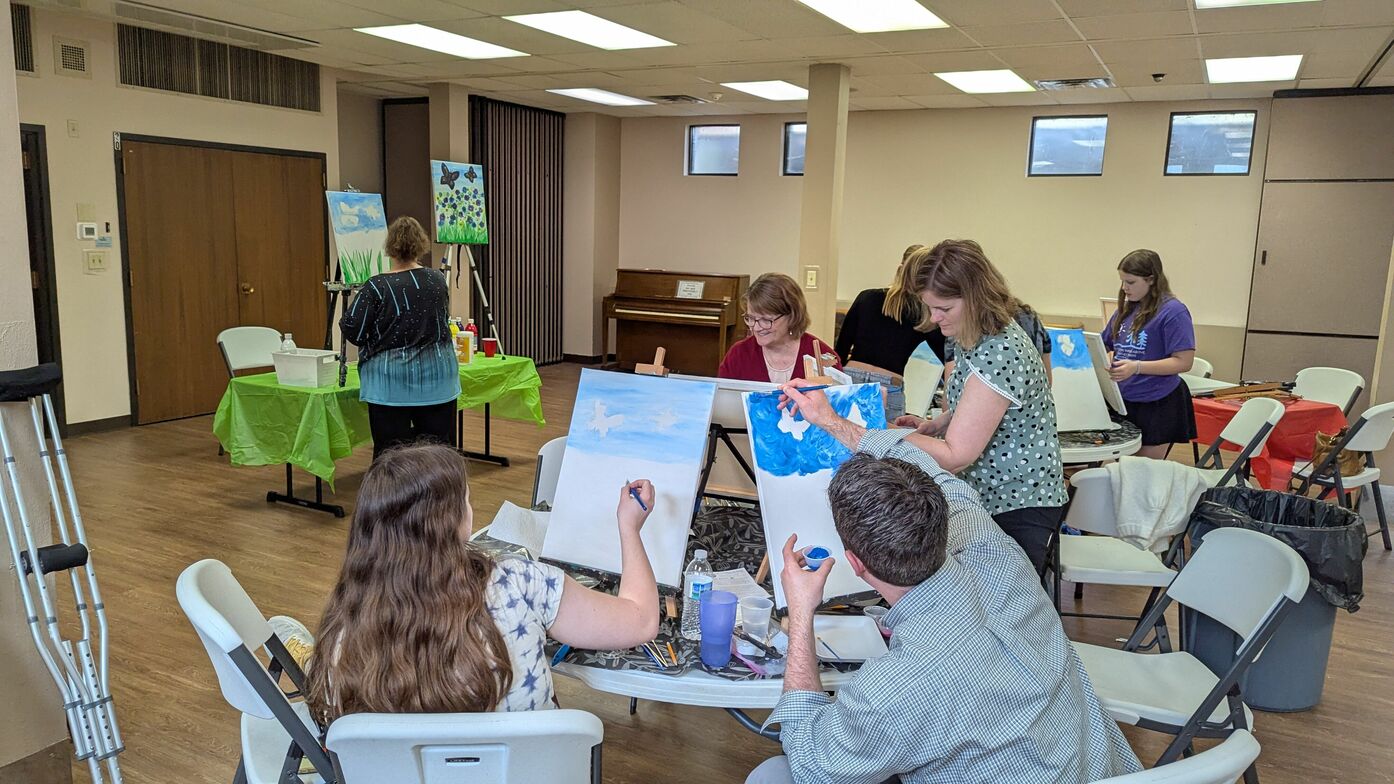
My Christmas and New Years celebrations included plenty of play. I hope yours did too.
The general attitude on the part of Western culture, in particular for adults, is that play is what you do when the garbage is out, the dishes are done, the mortgage is paid. Or that it’s a hedonistic escape. And I don't see it as frivolous as that.
So says Dr. Stuart Brown, play researcher and founder of the National Institute for Play. Dr. Brown found that when we play, specific areas of our brains are active. If we were hooked up to an EEG brain scanner while we played, the monitor would be alight in these certain regions. The same ones for trust, joy, and empathy.
Each of us have our own play personalities, Dr. Brown says. Sports and other competition, music and art and creativity, tinkering and building, collecting, hosting parties or events, joking and laughter, telling stories, exploring and being in motion, moving our bodies, are all forms of play.
Among the scriptures I’ve long kept close as companions or mentors are Nehemiah 8:10 and Psalm 104:26. The Nehemiah verse I learned as a child as a Sunday school song: “...the joy of the Lord is your strength.” There’s not much more to the song than that! “The joy of the Lord is my strength” repeated again and again. It’s just what I needed as a child. And singing is play too.
Erik Thoennes, author of “Holy Play,” translates that Psalm verse this way: “There go the ships, and Leviathan, which you formed to play with.” God plays and wove play into the fabric of creation. As an expression of God’s wisdom, no less.
I’m sure I’ve told the story already of a vision I had of Jesus with a frisbee, come to be my playmate. And about my pastor, who used to tell us weary, overachieving college kids, “Go play!”
Playing is learning. Playing is rest and sabbath. Playing is healing. Play saves.
Faithful writer Debie Thomas recalls the epiphany she had reading C. S. Lewis’s classic, The Lion, the Witch, and the Wardrobe. Actually one scene in particular, after Aslan (the lion and stand in for God) is resurrected. The Witch (the devil character) is still raging, along with her war. “And at this dire moment,” Thomas writes,
Aslan takes a break from the solemn business of world-saving to play a rousing game of tag. “Oh children,” he shouts to the kids who have witnessed his resurrection, “I feel my strength coming back to me. Oh children, catch me if you can!” And off he goes, leading them on an exhilarating, joy-filled chase through the hills until they finally collapse “in a happy laughing heap of fur and arms and legs.” “It was such a romp,” Lewis writes, “as no one had ever had except in Narnia.”
Was Lewis inspired by that psalm verse about Leviathan, the sea monster? Can you imagine the romp they had, mighty creature and mighty creator? Can you imagine a God who romps with you?
We are starved for play, it seems. Which is another way of saying, we’re starved for hope. Thomas ends her reflection on playful Aslan this way. Timely.
I’m not particularly keen on New Year’s resolutions. But as I start 2019 and face a world like Aslan’s—a world in peril and need, desperate for hope and justice—I’m drawn to the power of play as an antidote to despair. To play is to trust, to resist anxiety. It is to believe that the ending will be a happy one and to bravely cocreate that ending with God. Sara Maitland writes in A Big-Enough God that “every old-fashioned sin list” should include the failure to have fun. That would completely change the way I practice my faith.
Oh, it has! It can!
Thanks be to God.
Pastor Clark Olson-Smith